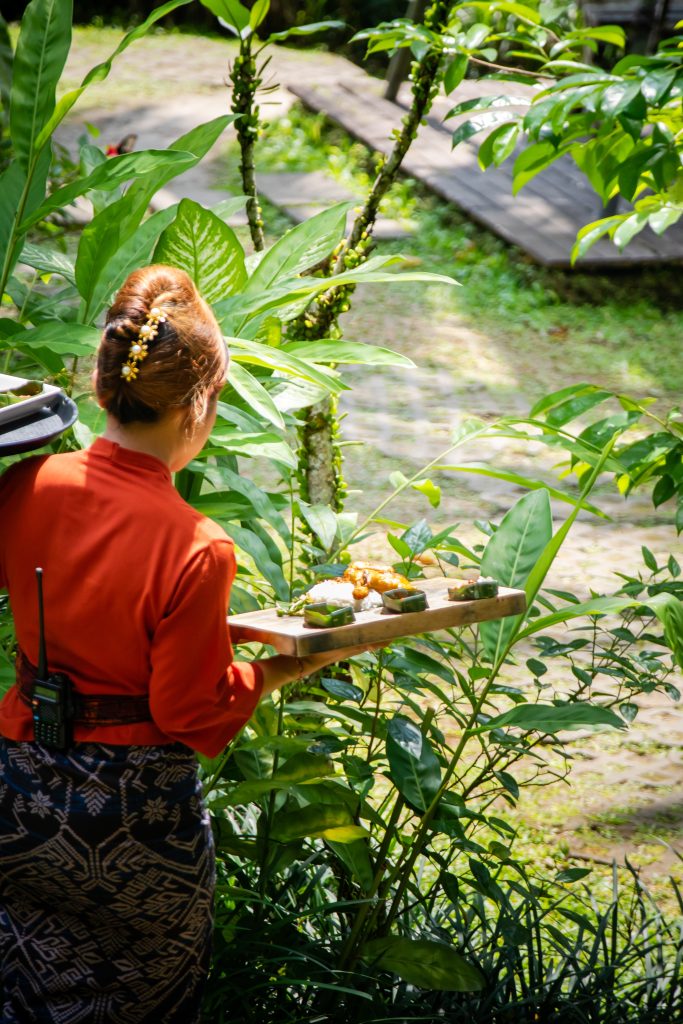

Discover Authentic Balinese Traditional Food at D’alas
Bali is a destination that captures the imagination of travelers from around the globe. Known for its stunning beaches, lush rice terraces, and vibrant spiritual culture, the island offers endless adventures. However, to truly understand the soul of this island, one must taste it. Balinese traditional food is one of the most complex and flavorful cuisines in the world. It is a harmonious blend of indigenous spices, fresh ingredients, and centuries-old cooking techniques.
For food lovers visiting Ubud, the search for authentic flavors is a priority. While there are many modern cafes and fusion restaurants, finding a place that honors the heritage of the island is special. D’alas Restaurant, located in the verdant highlands of Tegalalang, is dedicated to preserving and serving the best Balinese traditional food. Here, we invite you to explore the history, the ingredients, and the unforgettable tastes of our culture.
The Philosophy Behind Balinese Traditional Food
Unlike other cuisines that might focus on a single dominant flavor, Balinese cooking is all about balance. The local philosophy of Tri Hita Karana (harmony between people, nature, and the divine) extends into the kitchen. Consequently, every dish aims to balance the five key flavor profiles: sweet, sour, salty, bitter, and spicy.
The foundation of almost every dish in Balinese traditional food is Basa Genep. This is a complex spice paste that serves as the “mother sauce” of Balinese cooking. It typically includes up to 15 different ingredients, such as galangal, turmeric, ginger, lemongrass, garlic, shallots, and chilies. These ingredients are not just thrown together; they are traditionally ground by hand using a stone pestle and mortar.
This labor-intensive process releases the essential oils of the spices, creating a depth of flavor that a food processor simply cannot replicate. At D’alas, we respect these ancient methods. We believe that taking the time to prepare ingredients correctly is the first step in honoring the tradition. Therefore, when you dine with us, you are tasting history.
Fresh Ingredients from the Highlands
The quality of Balinese traditional food relies heavily on the freshness of its ingredients. In the past, Balinese families would harvest vegetables from their gardens and catch fish from the sea or rivers daily. Today, D’alas continues this farm-to-table spirit.
Our location in Tegalalang places us in the heart of Bali’s agricultural region. The volcanic soil here is incredibly fertile, producing robust herbs and vibrant vegetables. We source our ingredients locally whenever possible. This supports the local farming community and ensures that the food on your plate is nutrient-rich and bursting with flavor.
For example, the coconut used in our curries is freshly pressed. The difference between fresh coconut milk and the canned variety is night and day. Fresh milk is sweet, floral, and light, whereas processed milk can be heavy. This attention to raw materials elevates our dishes from simple meals to culinary experiences.
Must-Try Dishes in Balinese Traditional Food
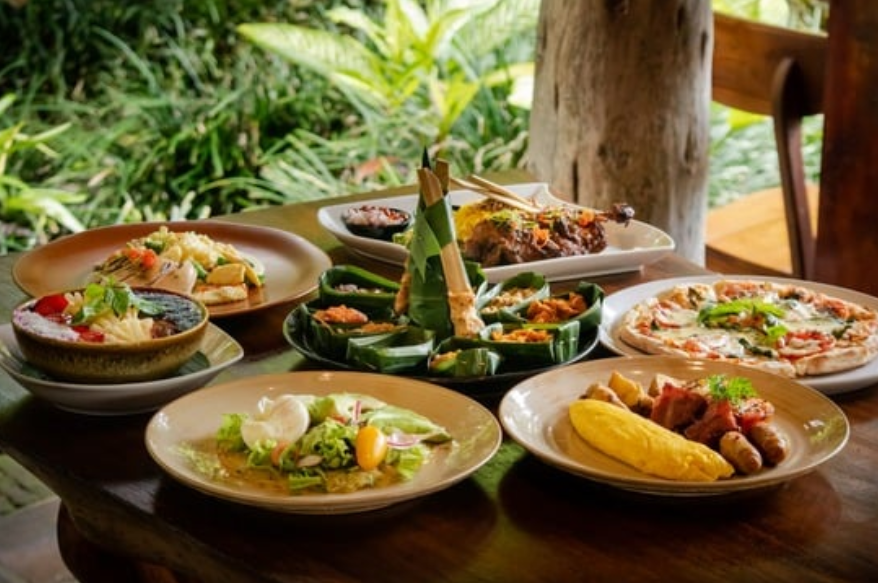
If you are new to this cuisine, the menu might seem overwhelming. However, there are several iconic dishes that serve as the perfect introduction to Balinese traditional food. Here are the stars of the show that you can enjoy at D’alas.
The Iconic Bebek Goreng (Crispy Duck)
Perhaps the most famous dish in Ubud is Bebek Goreng. Ducks have played a vital role in Balinese agriculture for centuries, often used to clear pests from rice fields. Naturally, they became a staple protein in the local diet.
The secret to a perfect Crispy Duck lies in the preparation. First, the meat is marinated in Basa Genep and massaged to ensure the spices penetrate deep into the fibers. Then, it is steamed or boiled to make it tender. Finally, it is deep-fried to golden perfection. The result is a skin that crackles with every bite, contrasting with the succulent meat inside. It is usually served with steaming white rice and Sambal Matah, a raw shallot and lemongrass relish that cuts through the richness of the duck.
Sate Lilit: A Twist on Satay
Most people know Satay as skewered chunks of meat with peanut sauce. However, the unique contribution of Balinese traditional food to the world of satay is Sate Lilit. The word “lilit” means “to wrap.”
In this dish, minced meat (often fish, chicken, or pork) is mixed with grated coconut, coconut milk, and a blend of spices. This mixture is then wrapped around a bamboo stick or a stalk of lemongrass and grilled over charcoal. The lemongrass stalk imparts a subtle citrus aroma to the meat as it cooks. Unlike other satays, Sate Lilit is savory and aromatic on its own and does not necessarily require a dipping sauce, although it is often served with Sambal.
Lawar: The Vegetable Mix
No Balinese feast is complete without Lawar. This is a mix of chopped vegetables (such as long beans or young jackfruit), grated coconut, and minced meat, all seasoned with rich spices. It is a texture bomb—crunchy, savory, and spicy all at once.
Lawar is more than just a side dish; it is a symbol of community. In villages, men often gather early in the morning before a ceremony to chop the ingredients and mix the Lawar together. It represents cooperation and communal joy. At D’alas, we prepare our Lawar fresh daily so you can taste this authentic aspect of Balinese traditional food.
The Cultural Experience of Dining
Eating in Bali is rarely a solitary activity. It is a communal affair, often done with family and friends. Furthermore, the setting plays a crucial role. In traditional Balinese homes, pavilions are open to nature.
D’alas recreates this atmosphere. Our restaurant features open-air bamboo architecture that looks out over the jungle valley. We believe that Balinese traditional food tastes better when you are connected to the land it came from. As you enjoy the spicy kick of a Sambal or the comfort of a warm soup, you can feel the cool breeze from the trees and hear the sounds of the forest. This multisensory experience is what differentiates a meal at D’alas from a dinner in a closed city room.
Why Choose D’alas for Your Culinary Adventure
With so many options in Ubud, why should you choose D’alas? The answer is authenticity combined with comfort. We do not dilute our spices to suit a generic palate. Instead, we present the bold, vibrant flavors that make Balinese traditional food so unique, while offering a comfortable, world-class dining environment.
In addition, our menu is inclusive. We understand that modern travelers have diverse dietary needs. While traditional Balinese cuisine is heavy on meat, we have adapted many classic recipes to create vegetarian and vegan versions. For instance, our vegetarian Nasi Campur allows plant-based eaters to experience the variety of Balinese flavors without compromise.
Experience the Best Balinese Traditional Food at D’alas
Travel is about discovery, and there is no better way to discover Bali than through your taste buds. From the aromatic ginger tea to the rich spices of the main course, every element tells a story of the island’s history and culture.
We invite you to step away from the busy streets and into our jungle sanctuary. Let us show you why our island’s cuisine is celebrated worldwide. Whether you are a spicy food enthusiast or simply curious about local culture, D’alas is ready to welcome you.
Are you ready to taste the real Bali? Tables with the best jungle views are limited and highly sought after.
Book your table now to enjoy authentic Balinese traditional food at D’alas Restaurant.