
The Ultimate Bali Food Guide Flavors You Must Experience
Bali is a destination that stimulates every sense. While the eyes feast on emerald rice terraces and the ears listen to the melody of gamelan music, the palate embarks on its own adventure. For food lovers, the “Island of the Gods” is a paradise of complex flavors, aromatic spices, and fresh ingredients. However, with so many options available—from street-side warungs to high-end venues—knowing where to start can be overwhelming. Therefore, we have compiled this essential Bali food guide to help you navigate the rich culinary landscape of the island.
Indonesian cuisine is diverse, but Balinese food stands apart due to its unique cultural and religious influences. It is bold, spicy, and deeply rooted in tradition. Whether you are a fearless eater ready to try street food or a traveler seeking a refined dining experience in the jungle, this guide will ensure you taste the very best of Bali.
Understanding the Foundation of Flavor
Before diving into specific dishes, it is important to understand what makes this cuisine so special. At the heart of almost every Balinese meal is Bumbu Bali (Balinese spice paste). Unlike Western cooking, where spices might be added at the end, Balinese cooking begins with the spice paste.
Local chefs grind ingredients such as galangal, turmeric, ginger, lemongrass, garlic, shallots, and chilies using a stone mortar and pestle. This fresh paste forms the base for curries, marinades, and vegetables. Consequently, the food possesses a depth of flavor that is impossible to replicate with dried powders. When you follow a Bali food guide, you are essentially following a trail of these aromatic spices.
Top Dishes to Include in Your Bali Food Guide
To truly experience the island, there are specific dishes that you simply must try. These meals are iconic and represent the history and culture of the region.
Bebek Goreng (Crispy Duck)
No Bali food guide is complete without mentioning Bebek Goreng. This is perhaps the most famous dish in the Ubud region. The preparation is meticulous. First, the duck is rubbed with spices and marinated for hours to allow the flavors to penetrate the meat. Then, it is steamed to ensure tenderness. Finally, it is deep-fried until the skin is incredibly crispy.
The result is a texture contrast that is addictive. It is typically served with steaming white rice, fresh vegetables, and a side of Sambal Matah (raw lemongrass and shallot chili paste). If you are exploring the highlands, this dish is mandatory.
Babi Guling (Suckling Pig)
While Indonesia is a predominantly Muslim country, Bali is unique with its Hindu majority. Therefore, pork features prominently in the local diet. Babi Guling is a celebratory dish that has become a tourist favorite. A whole pig is roasted over an open fire while being manually turned. The skin becomes golden and crackling, while the meat remains succulent.
Traditionally, this dish was served only during big ceremonies. However, due to its popularity, you can now find it daily. A standard portion includes a piece of crispy skin, white meat, blood sausage, and stewed vegetables. It offers an explosion of savory flavors.
Sate Lilit (Minced Satay)
Most travelers are familiar with satay, but Sate Lilit is distinctly Balinese. Instead of skewering chunks of meat, the meat (often fish, chicken, or pork) is minced and mixed with grated coconut, coconut milk, lemon juice, and spices.
The chef wraps this seasoned mixture around bamboo, sugar cane, or lemongrass sticks before grilling it over charcoal. The sugar cane or lemongrass adds a subtle sweetness and aroma to the meat. It is a perfect appetizer and a staple in any comprehensive Bali food guide.
Lawar (Traditional Vegetable Mix)
For a true taste of local life, you must try Lawar. This is a mix of vegetables, coconut, and minced meat mixed with rich herbs and spices. In some traditional versions, fresh blood is added to the mixture, giving it a red hue. However, most restaurants serving tourists offer “Lawar Putih” (White Lawar), which does not contain blood. It is crunchy, spicy, and incredibly fresh.
Dining Etiquette and Culture
Understanding the culture enhances the dining experience. In Bali, food is often viewed as a gift from the gods. Consequently, you will see small offerings of rice and flowers (Canang Sari) placed outside restaurants and even on kitchen equipment every morning.
When eating, locals traditionally use their right hand, as the left hand is considered impure. While most restaurants provide cutlery, trying to eat with your hands (after washing them) can be a fun way to connect with the culture. Furthermore, dining is often a communal activity. Dishes are placed in the center, and everyone shares. This “family-style” dining fosters connection and conversation.
Regional Flavors Coastal vs. Highland Bali food guide
A detailed Bali food guide should note the regional differences. The geography of the island dictates the menu.
If you are in coastal areas like Jimbaran or Uluwatu, the focus is naturally on seafood. Here, you will find Ikan Bakar (grilled fish) seasoned with sweet soy sauce and chili. The atmosphere is breezy and salty.
In contrast, if you travel inland to Ubud and the central mountains, the cuisine shifts. The cooler climate is perfect for growing spices and rice. Therefore, the food here is often earthier. Dishes like Bebek Betutu (slow-cooked duck) are prevalent. The setting changes from ocean views to lush jungles and terraced rice paddies. This shift in environment drastically changes the dining mood, moving from energetic beach vibes to serene, reflective jungle dining.
Why Ambiance Matters in Your Culinary Journey
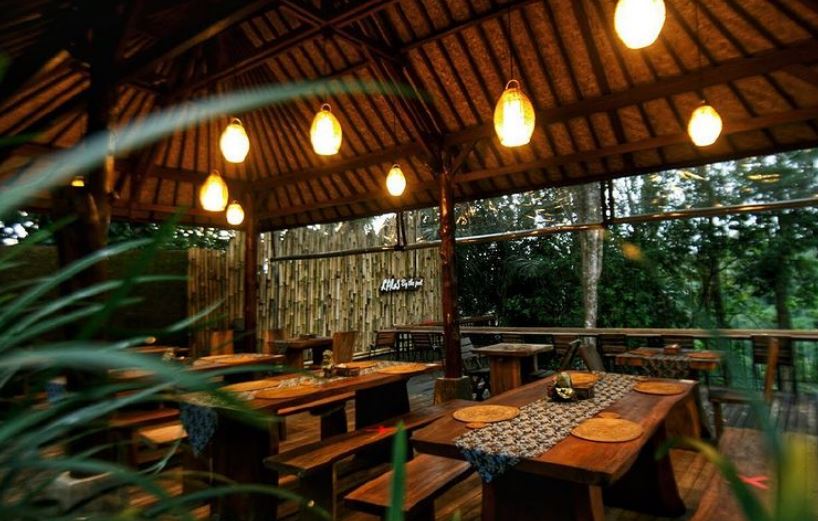
Food tastes better when the environment is beautiful. In Bali, the architecture and the landscape are ingredients in the meal. Many of the best dining spots are open-air structures made of bamboo. This design allows the breeze to flow through and keeps diners connected to nature.
When planning your itinerary using this Bali food guide, prioritize venues that offer a view. Eating a spicy Sambal while overlooking a river valley or a rice field is a therapeutic experience. It allows you to slow down. In the West, we often rush our meals. In Bali, the environment encourages you to linger, to savor, and to appreciate the moment.
Exploring the Coffee Culture Bali food guide
Bali is not just about food; it is also about coffee. The island produces excellent Arabica and Robusta beans, particularly in the Kintamani region. A food guide would be incomplete without suggesting a tasting of Balinese coffee.
You will often see Kopi Bali on the menu. This is traditional black coffee, brewed by pouring boiling water directly over fine grounds in the glass. It is strong, sweet, and leaves a muddy residue at the bottom. For a more modern experience, the island is teeming with cafes serving high-quality espressos and lattes, often using locally sourced beans.
Complete Your Bali Food Guide at D’alas
After reading about the incredible flavors of the island, the next step is tasting them. You need a location that combines authentic recipes, fresh ingredients, and the iconic scenery of Ubud.
D’alas Restaurant is the perfect destination to bring this Bali food guide to life. We are located in the heart of Tegalalang, surrounded by the very jungle that inspires our menu. Our chefs differ from others because they strictly adhere to traditional cooking methods while presenting dishes with modern elegance.
At D’alas, you can tick off the most important items on your culinary bucket list. From our signature Crispy Duck to our fresh Sate Lilit, every dish is a tribute to Balinese culture. Moreover, we cater to all dietary needs, offering an extensive selection of vegetarian and vegan options that utilize the abundant produce of the highlands.
We invite you to step off the beaten path and enter a sanctuary of taste. Don’t just read about Balinese food; come and experience it with all your senses.
Are you ready to turn this guide into a reality?
Click here to reserve your table and complete your Bali food guide experience at D’alas Restaurant.